The Minbar and the Message: Why the Friday Sermon Is Islam's Oldest Communication Strategy
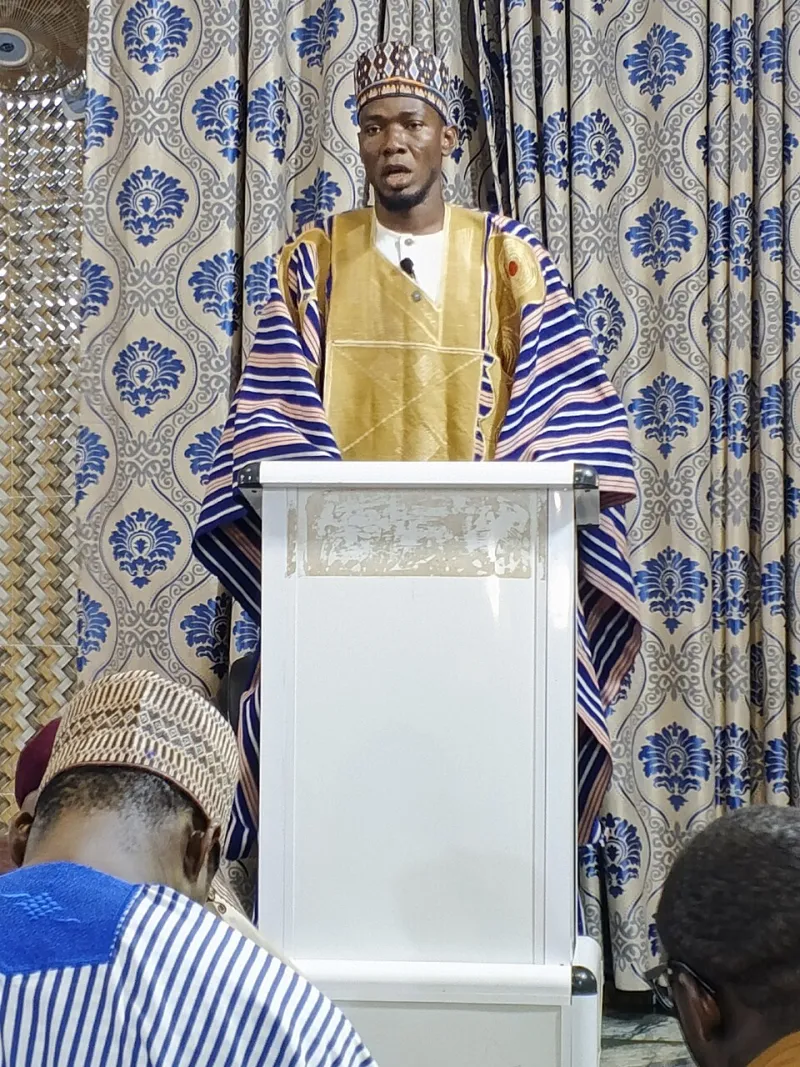
Photo: Musahfm, CC BY-SA 4.0, via Wikimedia Commons
Every Friday at noon, in storefront mosques in Dearborn and purpose-built complexes in suburban Texas, one of the most durable institutions of Islamic political life convenes: the khutbah. It has outlasted empires, survived colonization, and crossed the Atlantic with immigrant communities. No parliament, no party, no press organ in Muslim history has matched its longevity or its reach.
For a site devoted to Islamic political thought, that endurance deserves attention. The minbar is not merely a religious fixture. It is a rhetorical institution—one that has always been understood, by those who ascend it and those who listen below, as a site of formation. The question for American Muslims is not whether the khutbah shapes political consciousness. It does. The question is whether it can do so deliberately, and with integrity, in a media environment designed to fragment attention.
An Institution Older Than the Ballot
The Prophet ﷺ delivered his sermons from a wooden pulpit; the caliphs after him used the Friday address to announce policy, mobilize armies, and legitimize succession. Classical jurists treated the khutbah as a condition of the prayer's validity, which meant that every Muslim polity had a built-in, weekly, mandatory assembly. No modern democracy enjoys such a reliable civic rhythm.
This is why authoritarian governments have historically policed sermons so carefully—and why American Muslims should recognize the minbar for what it is: a platform of governance in miniature. When an imam addresses the community on family, finance, or justice, he is performing a function that political theorists would recognize as agenda-setting.
What the Speechwriter Knows
American political communication has developed a sophisticated craft: message discipline, narrative arc, audience segmentation, the memorable three-part line. Some of it is manipulative, and Muslims are right to be wary. But some of it is simply rhetoric—the discipline Aristotle described and that Arab grammarians and rhetoricians, the masters of balagha, refined centuries earlier.
Consultants who advise Muslim civic leaders describe a familiar gap. One speechwriter who has worked with elected officials and community organizations in the Washington area puts it plainly: most khutbahs fail not for lack of sincerity but for lack of structure. The imam has eleven points, no throughline, and no single sentence a listener could repeat at dinner.
Contrast that with the classical khutbah form itself: a concise opening, praise, a central message, and a closing appeal. The tradition already contains what speechwriters call a narrative arc. The craft techniques do not need to be imported; they need to be recovered.
Three Sermons That Moved the Conversation
Consider the khutbahs that have genuinely shaped American Muslim public life in recent years. After the 2016 election, sermons across the country addressed fear and belonging; several circulated online in the tens of thousands of views, functioning less as local addresses than as national statements. Following the 2020 murder of George Floyd, imams who grounded their remarks in Qur'anic injunctions on justice—rather than in partisan talking points—produced the most durable and most shared reflections, including within non-Muslim audiences.
And during the pandemic, when the minbar went silent, a handful of preachers adapted quickly to video formats with tight openings and single-message structures. Their sermons traveled; the meandering forty-minute recordings did not. The lesson is consistent: clarity amplifies sincerity. It does not compete with it.
The Limits of the Analogy
Two cautions are necessary. First, the khutbah is an ibadah, an act of worship, not a campaign rally. Techniques borrowed from political communication must serve the sermon's purpose; the moment the message is shaped by what polls well rather than what is true, the institution is corrupted from within.
Second, segmentation has a dark twin: pandering. An imam who preaches one message to the young professionals and another to the elders is not communicating; he is flattering. The Prophet ﷺ addressed all levels of the community in a single gathering and trusted the truth to land where it would.
A Weekly Election of Ideas
It is tempting to say the khutbah functions like a weekly election, in which the community's attention, conviction, and subsequent action are voted toward one vision or another. The metaphor overstates the case—but only slightly. Every Friday, the minbar competes with podcasts, cable news, and the algorithm for the formation of Muslim consciousness. Silence or drift is itself a message.
The ummah's oldest rhetorical institution should neither apologize for its power nor surrender its craft to the secular consultants. It should master the tools, hold fast to the purpose, and remember that the first great orator of this ummah never needed a teleprompter—only truth, delivered clearly, to hearts prepared to receive it.