Signed in Fear, Filed in Faith: The Quiet Politics of the Islamic Estate Plan

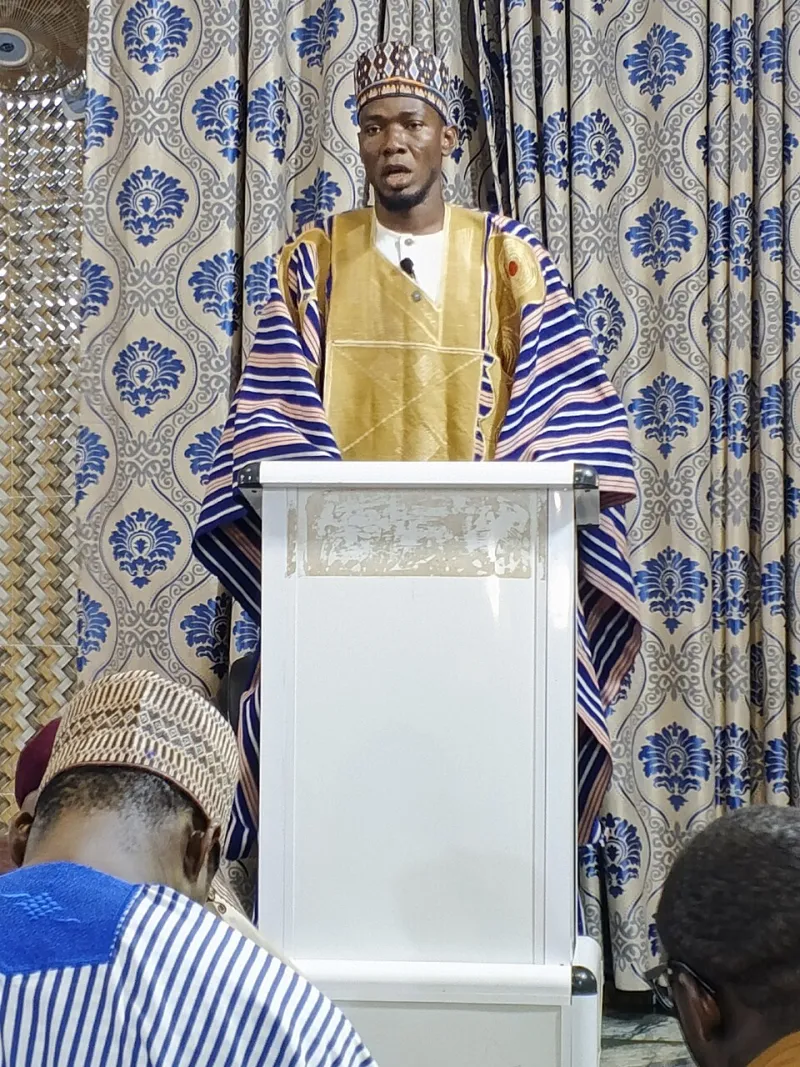
Photo: Joshua Qualls (Massachusetts Governor’s Press Office), Public domain, via Wikimedia Commons
Every American Muslim who has sat across from an estate attorney knows the awkward moment. The shares are fixed. The fractions are non-negotiable. A son receives twice the portion of a daughter; a surviving spouse takes an eighth; the calculation was settled in revelation fourteen centuries ago. The attorney, well-meaning and often untrained in fiqh al-mawarith, must now translate faraid into a document that a county probate judge in Cook County or Harris County will honor without blinking.
That translation is not merely a legal chore. It is a political act, and it may be the most consequential political act an American Muslim performs in a lifetime — more consequential, arguably, than any vote cast in November.
The Ballot Is Ephemeral; the Will Is Enforceable
Consider the asymmetry. A vote is a single data point, diluted among millions, filtered through an electoral system that rarely responds to a minority constituency of three to four million people. A properly drafted Islamic will, by contrast, is a binding instrument. Once admitted to probate, it commands the coercive machinery of the state: courts, executors, sheriffs who will eject a non-compliant heir from inherited property. When a will directs distribution according to the inheritance shares of the Quran, the state is enforcing divine law. Not symbolically. Literally.
This is what makes the Islamic estate plan a quiet battleground. It is one of the only arenas where sharia principles are not merely practiced privately but given binding legal effect by American courts. Every notarized document is a small precedent, a demonstration that the American legal system can accommodate revealed law without rupture.
The Intestacy Trap
The stakes become clear when one examines what happens without such a document. Dying intestate — without a will — surrenders the entire estate to state intestacy statutes. Those statutes divide property according to legislative assumption, not revelation. In most states, a surviving spouse takes the entire estate or the first large share of it, leaving children, parents, and siblings with nothing or nearly nothing. Under faraid, by contrast, the spouse's share is fixed and specific, and the obligations to parents, daughters, and other relatives are non-discretionary.
The consequences are not abstract. Estates worth hundreds of thousands of dollars — often the accumulated life savings of immigrant families — have been distributed in ways that violate clear Quranic injunctions, simply because no one drafted a document. A mother's share lost to a statute; a daughter's portion erased by default rules. For a community that regards inheritance as a matter of divine command rather than parental discretion, dying without a will is not merely imprudent. It is a failure of obedience with multimillion-dollar aggregate consequences across the American ummah.
The Legal Architecture of Accommodation
The good news is that the legal architecture for accommodation largely exists. The federal Religious Land Use and Institutionalized Persons Act protects institutional religious exercise, and courts have long honored testamentary freedom — the near-absolute American right to dispose of property by will. A testator in Texas or New Jersey can direct that her estate be divided per stirpes, per capita, or per the shares specified in her faith tradition, and the court will generally not inquire further.
But friction points remain. Some states have probate doctrines that strain against fixed-share systems. Heirs may litigate, claiming duress or lack of capacity. Attorneys unfamiliar with faraid may draft documents that reference Islamic law vaguely, inviting a constitutional challenge under establishment-clause theories — the argument, increasingly common in conservative legal circles, that any court enforcement of religious law constitutes an improper entanglement. The savvy practitioner avoids this by drafting the will in the language of secular estate law while incorporating the Islamic shares as a defined schedule, letting the document stand on testamentary freedom rather than on any claim about religious authority.
This drafting craft — the difference between a will that survives probate and one that collapses into litigation — is where the community's institutions must invest. National organizations now publish template Islamic wills; several Muslim legal associations have built referral networks for fiqh-literate estate attorneys. The infrastructure is young but growing.
From Private Document to Public Philosophy
It is tempting to see all of this as merely practical: sign the papers, protect the family, move on. But the deeper significance deserves attention. The khilafah ideal rests on a proposition that many Americans find alien — that divine law can order public life, not just private devotion. The Islamic estate plan is a modest, peaceful, entirely constitutional demonstration of that proposition. It shows that revealed law and the American legal system can coexist, that a court in Michigan can enforce the shares of Surah an-Nisa without any crisis of legitimacy.
One notarized document at a time, American Muslims are building a record: that sharia-compliant governance is not a threat to be feared but an accommodation to be managed, as ordinary as a kosher contract or a Sabbath accommodation. That record matters — for the community's standing, for the legal profession's imagination, and for the long argument about whether Islam belongs in the public order of this republic.
Sign the will. File it with the county. It is a small act, but it is governance, and it outlives every ballot you will ever cast.