Capital of the Ummah: How Muslim PACs Learned to Speak Washington's Language
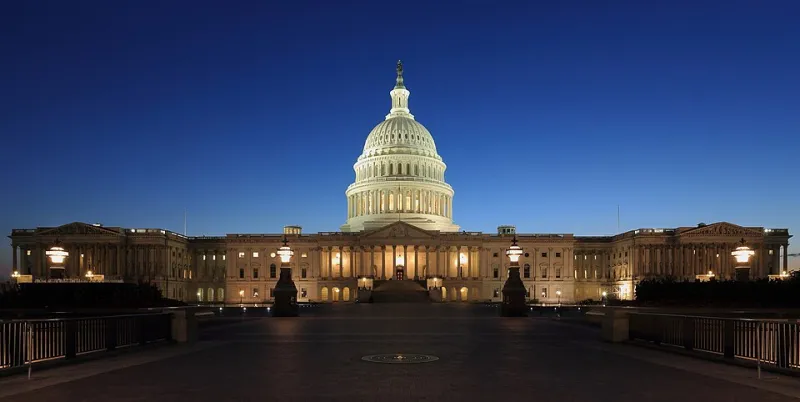
Photo: Martin Falbisoner, CC BY-SA 3.0, via Wikimedia Commons
There was a time, not long ago, when the presence of a Muslim American in a congressional office was an event — a novelty to be noted, a constituent to be politely heard and politely dismissed. That era has ended. Today, Muslim political action committees and advocacy organizations operate from established positions within the American political machinery: they endorse candidates, channel donations, and place policy papers on desks where decisions are actually made. The question confronting the ummah is no longer whether Muslims will engage the levers of American power. It is what kind of engagement our tradition can bless.
From the Margins to the Markup Rooms
The institutional maturation of Muslim political life in the United States followed a familiar immigrant arc. The first generation built the mosques, the schools, the halal markets — the infrastructure of survival. Their children, born in New Jersey and Dearborn and suburban Dallas, built the infrastructure of influence. Organizations that once focused on civil rights complaints and airport screening grievances now field legislative scorecards, train candidates for city councils and statehouses, and coordinate get-out-the-vote operations with the professionalism of any established ethnic lobby.
This is not a trivial development. A community that was politically voiceless after 9/11 has, within a generation, produced members of Congress, federal judges, and a lobbying presence that both parties must now calculate. The politics of presence — the sheer fact of being counted — has matured into the politics of negotiation.
What the Shari'ah Says About the Corridor
Classical jurists developed the doctrine of siyasah shar'iyyah — governance in accordance with divine law — to address precisely this kind of problem: how to pursue legitimate political ends through the imperfect tools available. The doctrine's core insight is that strategy is not compromise. The Prophet ﷺ entered treaties that fell short of ideal outcomes, and the early caliphs made administrative accommodations that a purist might have rejected. Jurisprudence has always distinguished between the ends the Shari'ah commands and the means a fallen world permits.
Applied to Washington, siyasah shar'iyyah suggests that lobbying for just policies — protecting civil liberties, opposing injustice abroad, securing religious accommodation — is not a betrayal of principle but potentially its fulfillment. The transactional mechanics of American politics are the vehicle; the destination is the establishment of what is right and the prevention of what is wrong, amr bil ma'ruf wa nahy an al-munkar, pursued through whatever lawful channels exist.
The Tension the Lobby Cannot Escape
Yet honesty requires acknowledging the friction. The ummah is, in principle, a community of solidarity — its bonds are those of covenant, not contract. Washington runs on quid pro quo. When a PAC endorses a candidate, it implicitly trades its moral witness for access. When donations flow to politicians who will deliver on one issue, silence is purchased on another. Critics within the community ask whether the lobby has begun to mistake influence for integrity, whether the pursuit of a seat at the table has dulled the prophetic voice that once spoke uncomfortable truths to both parties.
There is also the question of collective representation. A PAC speaks in the name of "Muslim Americans," but the community spans Salafis and Sufis, immigrants and converts, single-issue voters and full-spectrum partisans. Whose fiqh governs the endorsement? Whose red lines are non-negotiable? The danger is that institutional Islam in America becomes an elite project — a class of professional advocates negotiating on behalf of a community they consult only at election time.
A Framework for Faithful Influence
The tradition offers criteria by which Muslim political engagement can be judged. First, clarity of objective: influence must serve maqasid al-shari'ah — the protection of faith, life, intellect, family, and property — not the perpetuation of the institution itself. Second, transparency with the community: endorsements and concessions should be defensible in a town hall of the ummah, not merely in a Washington steakhouse. Third, independence of witness: there are moments when the correct move is to withhold endorsement, to walk away from the table, to remind both parties that Muslim votes are earned, not owned.
The caliphate ideal that animates this publication is not nostalgia for a vanished empire; it is the conviction that political authority and divine guidance cannot be permanently divorced. American Muslims will not establish a khilafah on the Potomac. But they can build something the classical texts would recognize: a community that engages power without being absorbed by it, that negotiates without surrendering its covenant, that treats the machinery of lobbying as a tool — never a master.
The PACs have learned Washington's language. The remaining task, and it is the harder one, is to keep speaking it without forgetting their own.