Certification Without a Caliphate: How Halal Trade Became America's Shadow Diplomacy

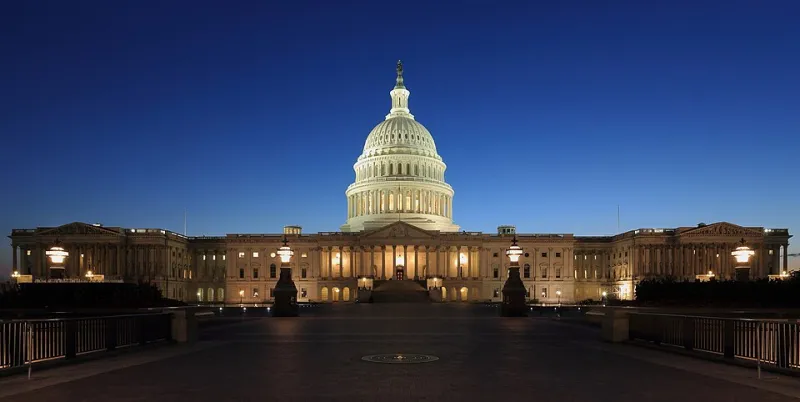
Photo: AgainErick, CC BY-SA 4.0, via Wikimedia Commons
When a halal-certified beef shipment leaves a processing plant in Nebraska bound for a distributor in Dubai, it carries more than meat. It carries the accumulated weight of a diplomatic architecture that no government designed and no ministry controls. American Muslim traders, certifiers, and freight operators have constructed a web of transnational commercial relationships that functions, in practice, as a foreign policy — one negotiated in warehouses and audit reports rather than summit communiqués.
For students of Islamic political thought, this deserves closer attention than it typically receives. What these networks demonstrate is that economic coordination among Muslims does not require a state to initiate it. It requires standards, trust, and institutions capable of enforcing both.
The Diplomats Nobody Appointed
Consider the daily work of an American halal certification body seeking recognition from Malaysian authorities, or a Chicago-based importer reconciling Gulf import regulations with USDA inspection regimes. These are acts of negotiation between legal systems — precisely the work that, in classical Islamic political theory, belonged to the state's treaty-making apparatus.
Yet no state performs it here. Instead, private certifiers broker mutual recognition. Trade associations harmonize slaughter standards across jurisdictions. Logistics firms build the paper trails that satisfy Indonesian inspectors and American customs officers simultaneously. The result is a functioning system of inter-communal commercial law that operates across borders without a single signatory government at its head.
This is not a trivial development. It is, arguably, the most advanced existing experiment in what Muslim thinkers have long theorized: the ummah as an economic body capable of coordinated action.
Standards as Sovereignty
The classical jurists understood that control of standards is a form of rule. Whoever defines what is halal — and whose definition is accepted at the port of entry — exercises a quiet authority over markets, livelihoods, and the religious life of consumers.
Today, that authority is dispersed. Malaysian JAKIM's recognition carries weight from Chicago to Cairo. Turkish certifiers negotiate directly with American exporters. Gulf states set import conditions that reshape processing practices in the American heartland. Each of these relationships is, in effect, a bilateral negotiation — conducted not by ambassadors but by auditors.
Critics within the community note the fragmentation: competing standards, duplicated inspections, and a credibility problem when certification becomes a market commodity. These are real defects. But they are the growing pains of any legal order, not evidence that the order is impossible. The medieval hisba tradition — the institution of market inspection — faced identical questions about who inspects the inspectors.
Lessons for Islamic Political Theory
Three lessons emerge from the American experience that matter for broader Islamic political thought.
First, coordination precedes institutions. The networks did not wait for a governing body to authorize them; the networks themselves are becoming the governing body. Political theorists who insist that unity must begin with a state may have the sequence backwards.
Second, trust is infrastructure. The most valuable asset in this system is not capital but credibility — the accumulated assurance that a certificate from one party means something to another. Islamic commercial ethics, with its emphasis on amanah and the prohibition of gharar (excessive uncertainty), turns out to be a practical operating system for long-distance trade, not merely a set of prohibitions.
Third, diaspora is not exile. American Muslims, often framed as a community removed from the Muslim world's political centers, have in fact become nodes in its economic circulation. The Nebraska plant certified for three continents tells a different story than the narrative of marginalization.
From Contracts to Constitution
None of this should be mistaken for the khilafah itself. Commerce is not governance, and a certification regime is not a political order. The ummah's deeper needs — justice, defense, the welfare obligations of zakat at scale — cannot be met by trade networks alone.
But every political order in Islamic history began with economic and social ties that preceded the state. The Hijaz's caravan networks preceded Medina. The Indian Ocean trade preceded the sultanates that taxed it. What American Muslims are building — patiently, imperfectly, without headlines — is the connective tissue from which political forms eventually grow.
The lesson for the ummah is not that commerce replaces politics. It is that politics built on functioning economic cooperation stands on firmer ground than politics built on slogans. The halal supply chain is not a foreign policy by design. It is a foreign policy by necessity — and it may be the most honest one the ummah currently has.